








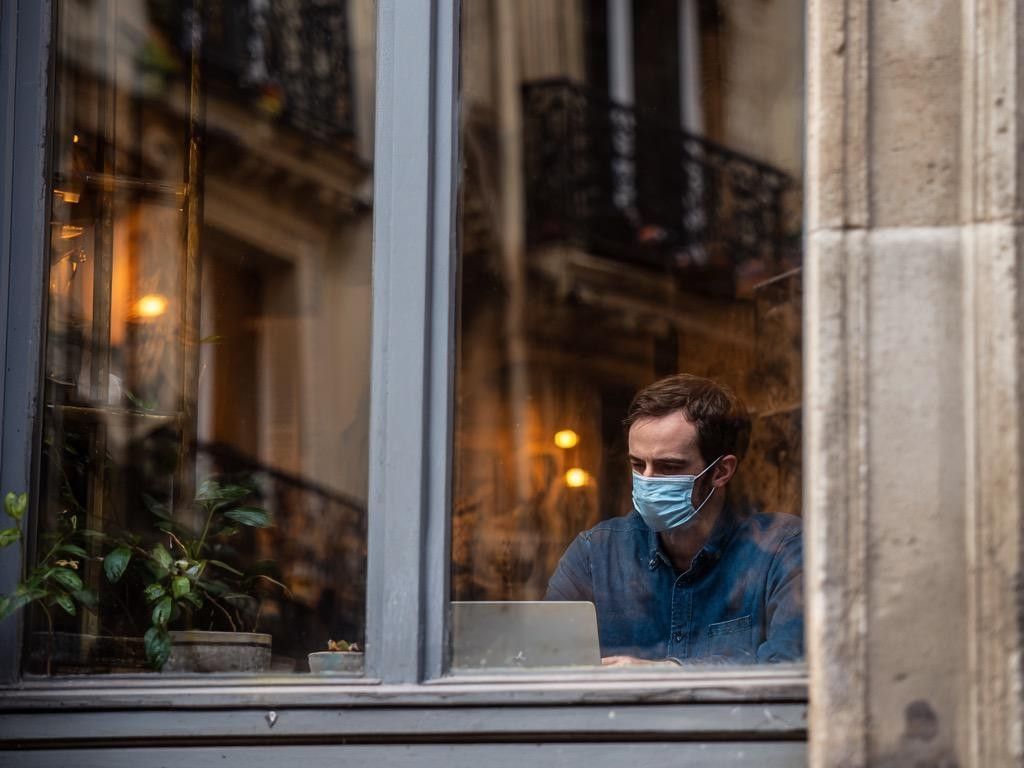
The pandemic has changed our daily lives. Our personal freedom, our social relationships, our habits and the way we work. Forbes magazine recently ran the headline: "Covid, what management strategies? Indeed, how to manage your teams or your company in the middle of a global epidemic?
Telecommuting, remote management, coworking and virtual meetings, we had to adapt to maintain a professional activity. If some managers and employees are reluctant to change, what if these new work practices were an opportunity?
Let's take a closer look at the opportunities of work organization changes.
Telecommuting
Since the advent of the Internet and new digital tools, telecommuting has been the subject of debate. On the one hand, companies and managers are sometimes afraid of it. How to make sure that the telecommuting professional is focused on his daily missions? On the other hand, telecommuting in companies has proven to be very effective while working remotely.
With the containment of the Corona Virus, telecommuting has gone from being an option to being a necessity. The opportunity for many companies and employees to experiment with this way of working remotely.
The result? Obviously, it is almost impossible and often not desirable to maintain telecommuting for long periods of time. On the other hand, this method has proven itself and should be more easily allowed. A new way of thinking about presence in the company: Why have to waste an hour in traffic every day to do a job that could be done from home? By encouraging weekly or occasional telecommuting, it is to ensure the optimization of the employee's time and to allow him/her, despite the preconceived ideas, to be better focused on these tasks instead of thinking about the potential traffic jams on the way back.
A decompartmentalized company
With the return to work following deconfinement, the organization of the workplace was reviewed. L'Espace had to be divided to ensure everyone's safety. We also had to limit the flow of visitors. So have you thought about changing your view of your infrastructure? How about getting out of your office and doing your meetings outside?
Coworking spaces are ideal places to host your meetings and client/supplier negotiations in the months to come. Professionally maintained and sanitized, they limit access to your premises to outside visitors. A perfect neutral ground and a greater flexibility of place and time. You can choose online the coworking space that best suits your situation and your contacts. Not to mention that coworking spaces provide all the services you may need.
Towards the end of "meetings"?
Speaking of meetings, how many of us have had the experience of non-productive meetings? A practice that is unfortunately more widespread than we think. We receive an email inviting us to a meeting without a clear definition of the purpose, the objectives, the potential work to be done beforehand and our role to play. The meeting takes place with more or less success. Very often " meetingitis " results in a considerable loss of time for all stakeholders.
With the current health crisis, we need to minimize our contacts as much as possible. For the organization of meetings, this leads us to rethink them and prepare them better. Is this meeting really a priority? Can it be done remotely? How can we ensure that only the key people needed to advance the project are invited? This is an opportunity for all companies to review the processes related to the organization of these meetings in order to focus only on the essential. And to allow everyone to have the time to prepare them well so that they become more efficient
New ways of working together
Another accomplishment that the Covid crisis allowed us to achieve. By separating us from our colleagues, it made us aware of how lucky we are to work together. We missed the pleasure of teamwork and the driving force of working together. A step back to be celebrated together as soon as circumstances permit.
As a company director or manager, why not take advantage of this to promote well-being at work? Let's take advantage of it to stimulate opportunities for sharing and exchange between teams and between employees! For your future seminars, meetings or even brainstorms, think of makerspaces, Fablab and other coworking spaces in agile mode. To find out more, we've put together an article to help you enter a new era of work, more productive, more respectful of people and more creative.
Churchill's adage could not be more applicable to these troubled times: A pessimist sees difficulty in every opportunity, an optimist sees opportunity in every difficulty. Ready to enter a new era of work at the end of the pandemic? We're here to help you get there!
-
Why a digital company must also invest in its professional spaces

23/02/2026 Why a digital company must also invest in its professional spaces
It's easy to imagine a digital company operating with almost no materials. Computers, the cloud, video meetings and you're all set. Yet behind this modern image, there are offices, workstations and reception areas. The digital world is based on a very tangible environment.
-
How can the flexible office reconcile real-estate costs and employee expectations?

05/01/2026 How can the flexible office reconcile real-estate costs and employee expectations?
For decades, the office has been seen as an immutable anchor: an assigned position, a fixed desk, a space designed to accommodate every employee from Monday to Friday, between 9am and 6pm. But this model, long considered indisputable, is now faltering under the impact of profound transformations in the world of work. Massive telecommuting, renewed employee expectations, the search for balance and meaning, and economic pressure on real estate are all forcing organizations to rethink their approach.
-
From cost reduction to cultural transformation: the real challenges of the flexible office

15/12/2025 From cost reduction to cultural transformation: the real challenges of the flexible office
Giving up personal office allocation was no longer seen as an upheaval, but rather as an obvious way of reducing costs, improving real estate efficiency and adapting spaces to contemporary uses. However, the companies that have taken the plunge recognize that the reality far exceeds this initial justification. A genuine cultural transformation was underway!