







It has long been a divisive issue, between those who saw it as a revolution in the workplace and those who saw it as a threat to team cohesion. Yet today, telecommuting is no longer a controversial issue. It has become an established fact in all company agreements, to the point of melting into everyday working life in France, rather like videoconferencing, capsule-free coffee or "flexible Fridays". For many, telecommuting is seen as a social right. So why ask the question? Because, as with many social issues, there are some die-hards who refuse to accept progress and raise the issue of a definitive or partial end to telecommuting. These include Google, which has issued an ultimatum to its teleworking employees, and Free and Société Générale, which are calling for a reduction in teleworking days. Beware of the backlash that could hurt some companies, as nearly one employee in two says he or she would resign if telecommuting were abolished, according to a recent survey by the Observatoire du télétravail. It was our duty to put the church back in the village and look at the benefits of this model.
Telecommuting: an established practice
According to INSEE (March 2025), 22% of private-sector employees telework at least one day a month. This level has remained stable over the past two years, proof that the practice has found its stride. The dominant model is hybrid: two days at a distance, three at the office, according to Dares. A compromise that reassures everyone: enough flexibility for employees, enough togetherness for companies.
The face of telecommuting has also changed: gone are the days of the improvised open-space living-room table. Companies are investing in ergonomic equipment, more reliable connections, and forging partnerships with some of the big names in coworking andflexible spaces. Telecommuting is not destroying office life, it's redefining it.
Yet the danger is there, for beyond those companies that openly declare their position, the study by the Observatoire du télétravail cited reveals that 31% of respondents report that their employer encourages returning to the site "informally".
Telecommuting and flexible workspaces: a win-win model
If telecommuting is gaining ground, it's because it's a win-win situation for both company and employee. For employees, it's time saved: one day of telecommuting a week saves undeniable commuting time. It also means less fatigue and improved morale, as confirmed by the Malakoff Humanis barometer, which highlights a reduction in physical fatigue (85%), improved well-being and health (82%), and greater work efficiency (80%).
For companies, it's an economic and ecological lever.
The m² saved can be used to rethink offices: collaborative zones, flex-office, user-friendly spaces. In Paris, the average surface area per employee will fall from 16 m² in 2019 to 12 m² in 2024 (BNP Paribas RE Workplace Survey). And the reduction in home-work commutes helps to reduce the carbon footprint: according toADEME, up to 271 kg of CO₂ saved per employee per year for two days of weekly teleworking. A significant figure to include in your sustainability reports!
Telecommuting, the driving force behind France's territories
If it has transformed offices, it has also transformed the map of work. Medium-sized and rural towns, long on the bangs, are finding a new lease of life. In Vichy, Angers, Rodez and Tulle, brand-new coworking spaces welcome freelancers, nomadic employees and start-ups.
The phenomenon goes hand in hand with a new aspiration: to live where you want to be, without sacrificing your business. For local authorities, it's an economic and demographic opportunity: more families, more local consumption, more balance between employment areas.
But beware: not everything is idyllic. According to the Fondation Travailler Autrement, only 40% of jobs can actually be teleworked.
As for social ties, they remain fragile. Many companies are still looking for the right recipe: a little face-to-face for cohesion, a little distance for concentration.
Remote management also remains a challenge. How do you maintain trust, a sense of belonging and creativity? HR departments in all companies are tackling this issue: training hybrid managers, follow-up interviews, team-building revisited. Having improvised telecommuting, we now need to institutionalize it intelligently. And that's what flexible offices are for!
Telecommuting, stop or continue? In 2025, the debate is over
Telecommuting no longer needs to be "tested". It has become as much a part of working culture as e-mail or the smartphone. It will continue to evolve, to be regulated and refined, but it will not disappear.
Because it corresponds to a social reality: that of a world where we're less interested in being "in the office" than in working well, wherever we are. Because it's part of a more sustainable economy: less commuting, less useless square meters. And because it responds to a deep-seated aspiration: that of a more human, freer, smarter way of working.
In 2025, the question is no longer "stop or stop again?" It's rather: "how can we do it better?"
-
Top 5 coworking spaces in Nantes

07/01/2026 Top 5 coworking spaces in Nantes
In Nantes, the office real estate market is experiencing a trompe-l'œil recovery: with 42,100 m² placed in the first half of 2025 (+14% vs. 2024), momentum seems to be picking up, but the market remains structurally fragile.New supply is scarce, average floor space is shrinking (386 m²), and the rise of telecommuting is causing office occupancy rates to fall below 50% on certain days. However, coworking, and more specifically the flexible office in Nantes, is emerging as a concrete response to new working practices for major accounts and their employees.
-
Sport coworking: when the workspace becomes a place of well-being and performance
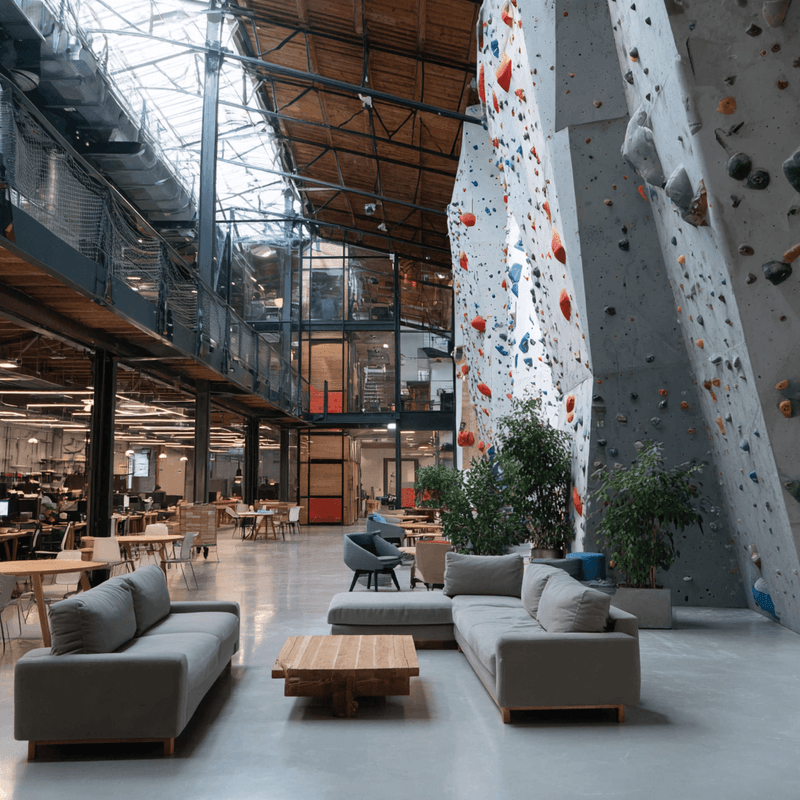
22/12/2025 Sport coworking: when the workspace becomes a place of well-being and performance
After the democratization of telecommuting, the rise of the flex-office and the growing popularity of third places, a new trend is quietly but surely emerging: sports coworking. A trend as powerful as the French craze for running in France. At the crossroads of well-being, performance and transformed uses, these hybrid spaces are challenging the way we live and work.
-
Announcing the birth of new coworking spaces
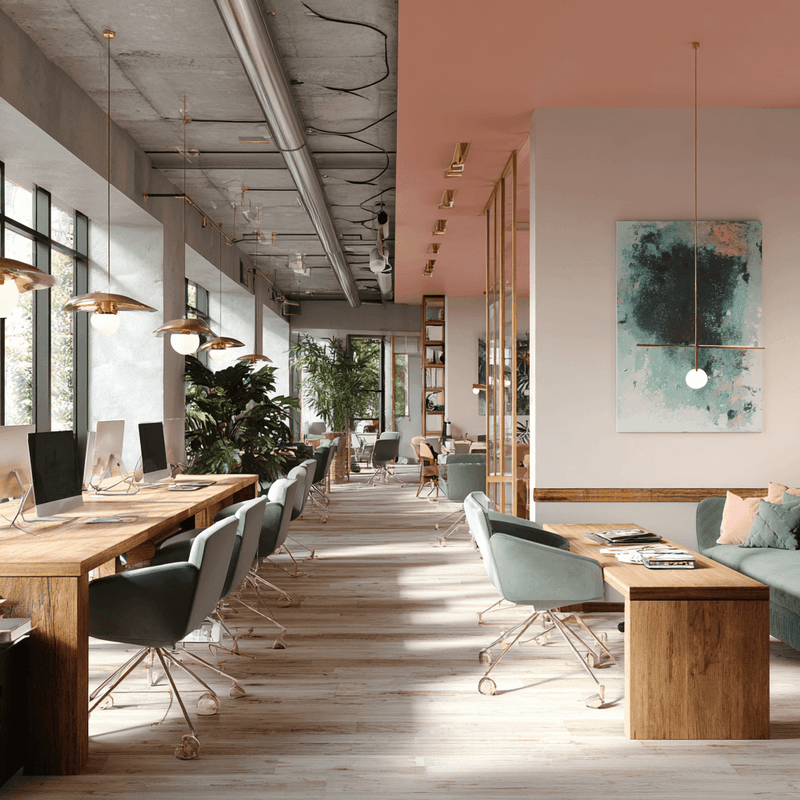
01/12/2025 Announcing the birth of new coworking spaces
Looks like the family is growing! Everywhere in France in 2025, new coworking spaces and flexible workspaces are springing up, in Paris of course, but also in Rennes, Dijon, Clermont, Brest, and even in small towns that had never seen a shared office before.