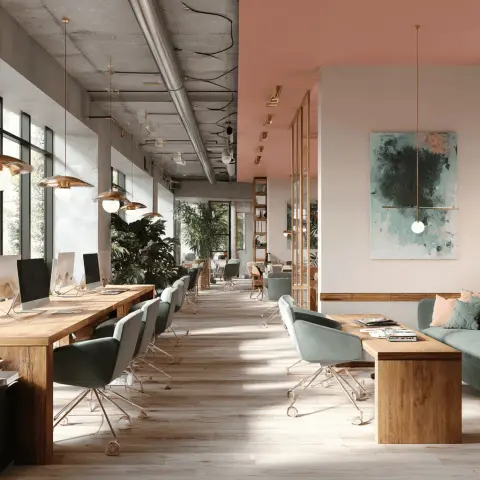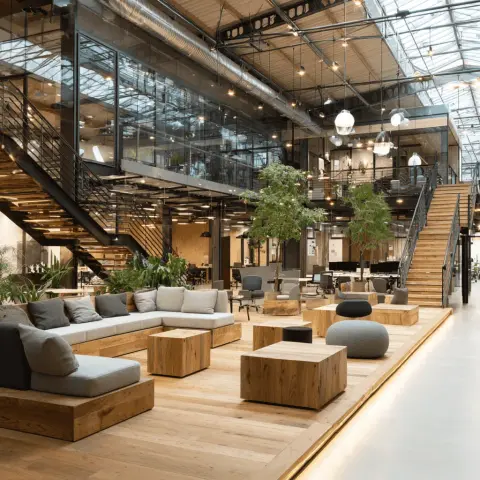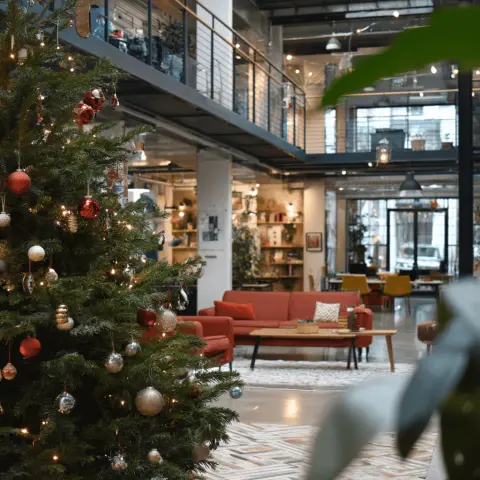
With over 4,200 spaces in France, coworking and, more broadly, the flexible office, are now an integral part of the infrastructure of the real estate and service sector economy. After a decade of hypergrowth, the market has reached maturity, but the golden age of shared square meters is running out of steam. Between real estate inflation, hybrid practices and squeezed margins, the sector's players are also having to reinvent their model, or at least make it profitable. The WeWork case is still fresh in everyone's mind, even if new spaces continue to spring up all the time.
It's no longer just a question of filling offices, but of giving meaning back to presence. How can we make flexible office space profitable without turning it into a mere business center? How can we preserve the very things that make a flexible office space great - its community, its encounters, its collective value - while facing up to the economic realities of a fragmented world of work? Here are some of the keys.
Profitability: a subtle balance between surface area, services and use
Yes, let's say it, because even though the coworking model , a historic pillar of the flexible office, is an integral part of today's real estate market, it still faces an average vacancy rate of 22% in Paris, according to a study by coworking brand Wojo.
Opening a coworking or flexible workspace means managing a hybrid business model. The first pillar is obviously the occupancy rate, a true barometer of the financial health of the space, but beyond the simple filling of workspaces, the key lies in the valuation of square meters: offering flexible formulas (day, week, subscription, privatization) while optimizing each space through on-demand services and bringing real added value to the tenant.
Successful players have understood that they're not selling m², but a work experience. Such is the case with Morning, Deskopolitan and Wojo, which combine design, hospitality and services: concierge services, catering, gyms and relaxation areas. Coworking becomes a place to live, an extension of well-being at work. And that's what we strive to promote at workin.space: not a space made up of m², but the identity of each individual coworker.
The result: a higher retention rate, a longer average subscription period, and word-of-mouth that's far more effective than any advertising campaign.
The community, driving value and attractiveness
A profitable flexible office space is first and foremost an inhabited space. The community is its most precious asset: it attracts, retains and legitimizes the space. Coworkers aren't just looking for an office, they're looking for a stimulating environment, professional synergies and opportunities for collaboration. Community management is therefore strategic.
Successful coworking spaces have understood the importance of a good hospitality manager or coworking manager, who acts as a facilitator, mediator and catalyst of ideas. They offer and run services, sometimes borrowing from the codes of luxury, to provide a genuine work experience: workshops, cross-training, themed events or simple morning coffees, every interaction creates invisible but essential value.
Diversifying uses to amortize and last
The strongest coworking spaces have realized that their survival depends on diversification. In addition to monthly subscriptions, they open their doors to new uses: corporate events, conferences, seminars, training courses, incubations, local innovation programs, artistic residencies or solidarity workshops. Each space has its own credo. This modularity smoothes out seasonality and maximizes ancillary revenues, while expanding the clientele to new audiences.
The Bazaar St So in Lille, in the heart of the Saint-Sauveur train station, for example, offers a monthly film club and regularly organizes festivals such as the Microtopies and Livre d'en haut festivals. Le Moon in Bordeaux offers art classes and workshops for children every Wednesday, and Drink & Paint workshops for older children.
Some go even further, like Les Tiers-Lieux Solidaires, integrating sustainable catering, a local store or a shared fablab.
Coworking thus becomes an ecosystem of activities, not just a place to work.
Operational efficiency: a lever for margins
Profitability also depends on operational rigor. Energy, cleaning, maintenance and connectivity can account for up to 40% of operating costs. A substantial budget item. Today's digital tools offer powerful performance management solutions: automated reservation systems, dynamic management of air conditioning and lighting, real-time monitoring of occupancy rates, predictive maintenance and integrated billing.
Here, data becomes a real lever for management. Some operators are even adopting a Smart Coworking approach to limit energy consumption, recycle materials or share space between several players. An ecological gain, but above all an economic one.
Local roots for long-term success
Beyond the business model, the success of a coworking space depends on its local relevance.
Coworking spaces don't exist in a vacuum; they are part of a territory, a community and an economy. Lasting projects are those that collaborate with local public and private players such as chambers of commerce, local authorities, universities and even associations. It's all about reconnecting with the various local players to recreate links.
In medium-sized towns and cities, these spaces can become a driving force for revitalization.
Making a coworking space profitable isn't just a matter of filling jobs, it's also about creating use value. It's about transforming a workplace into a space for living, networking and making an impact, where profitability is based as much on satisfaction as on occupancy.
In a changing world of work, the strongest coworking space will not be the biggest or the most stylish, but the one that combines agility, anchoring and usefulness. And what if the best profitability, at the end of the day, were the one that benefits everyone: the location, the community, and the territory it supports?