
Coworking spaces in Chiba
2 spaces in Chiba : By the day or for several months: coworking, meeting rooms, private offices and managed offices.
Need a space today in Chiba?
2 spaces within 5 km: a coworking open-space desk, a meeting room or an office for the day, real-time availability and online payment in 2 minutes.
Frequently asked questions about offices and workspaces in Chiba
Why use workin.space to find offices in Chiba?
We track 2 spaces within 20 km, and we keep their rates up to date continuously. That is what lets us tell you, before you make a single call, who charges what and on which office size.
On a longer project, our work starts where comparison ends: an expert who knows the local operators builds your shortlist within 48 hours, arranges the viewings and negotiates on your behalf, at no fee.
How many workspaces are there in Chiba?
Our directory holds 2 spaces within 20 km, 2 of which share their rates with us. The others work on quotation, and we ask them for you.
The most common brands: Regus (2).
Regus alone accounts for 2 of the 2 spaces in the area: the local market is largely shaped by a single brand.
How much does a private office cost per month in Chiba?
We record 2 spaces renting a private, closed office within 20 km.
We detail the inventory of 2 of them: 13 closed offices, that is 53 listed desks.
These amounts are all inclusive: equipped desk, charges, cleaning and shared services. That is what makes them hard to compare with a conventional lease, always quoted excluding charges.
- Monthly: from ¥49,500 excl. tax
- Half of the spaces below ¥53,000 per month, excl. tax
How much does one desk in a private office cost per month in Chiba?
Per desk, half of the Chiba spaces renting closed offices come in below ¥53,000 excl. tax per month.
This is the figure we use to compare two buildings: it cancels out office size and brings out the real gap between operators.
What is the largest team you can move into Chiba?
The largest closed office in our Chiba directory holds 9 people.
That figure does not tell the whole story. Large floors are rarely marketed online: operators keep them for qualified enquiries, and we regularly source ones that appear nowhere. Tell us about your project, we search off market too and come back to you within 48 hours.
Are the offices in Chiba accessible 24/7?
Yes for 2 of the 2 spaces we track within 20 km.
This is worth checking early: it governs weekend and out-of-hours access, and not every operator grants it on closed offices.
How much does a meeting room cost in Chiba by group size?
We track 2 spaces with at least one meeting room within 20 km.
- Hourly: from ¥1,789 excl. tax
- Daily: from ¥9,990 excl. tax
How much does a day of coworking cost in Chiba?
2 spaces open their shared area by the day within 20 km.
- Daily: from ¥8,492 excl. tax
- Half of the spaces below ¥9,192 per day, excl. tax
Can you rent an office by the day in Chiba?
Yes: 2 spaces rent a closed office by the day within 20 km.
This is the format our clients use for a board meeting, a recruitment session or a team passing through.
- Daily: from ¥15,885 excl. tax
- Half of the spaces below ¥17,450 per day, excl. tax
Figures measured across the 2 spaces we list within 20 km. Last updated: 14 October 2026.
Long-term serviced offices in Chiba
A single corporate operator controls every flexible desk listed within our 20 km catchment radius of Chiba. This complete monopoly means you get uniform corporate standards across 53 desks, but you will not find competing brands to play against each other during commercial negotiations. Note that this inventory reflects a 20 km catchment radius surrounding the centre, extending beyond the administrative boundary of Chiba itself.
Private offices and monthly coworking across 2 spaces in Chiba
Securing a monthly workspace means choosing between 13 private office configurations across 2 spaces, where the median price sits at 53,000 JPY per desk per month before tax. The largest published office unit accommodates 9 desks, though adjoining units can be combined for growing teams. Monthly coworking provides 2 bookable offers across the 2 locations, starting at 20,500 JPY per month before tax with a median of 20,500 JPY. Both locations provide round the clock access, with 2 spaces out of 2 operating 24/7. Committing to a serviced workspace spares you the massive non-refundable security deposits, interior restoration liabilities, and multi-year locks typical of traditional Japanese commercial leases. Signing a conventional corporate lease for a six-person team is the fastest way to turn your expansion capital into drywall and landlord collateral.
Meeting rooms in Chiba from 9,990 JPY a day
Booking offsite space for client presentations or board gatherings relies on 3 offers across 2 locations, starting at 9,990 JPY per day before tax with a daily median of 13,088 JPY. Granular capacity breakdowns per room size are unavailable in the published data. Reserving a Meeting room in Chiba strictly for the hours your team needs stops you paying twelve months of baseline rent on an eight-seat conference table that gathers dust between board reviews.
Day offices and daily coworking in Chiba
Dropping in for transient work runs through 2 bookable coworking options, starting at 1,062 JPY per hour or 8,492 JPY per day before tax, against a daily median of 9,192 JPY. Teams needing dedicated short-term space can secure a Day office in Chiba across 13 bookable options, starting from 2,843 JPY per hour, 15,885 JPY per day, or 49,500 JPY per month, with daily and monthly medians of 17,450 JPY and 53,000 JPY before tax. A flexible Coworking day pass in Chiba works for field testing an address, but relying on daily passes for an active delivery team burns operational budgets faster than a structured monthly desk agreement.
Chiba: the two spaces we highlight
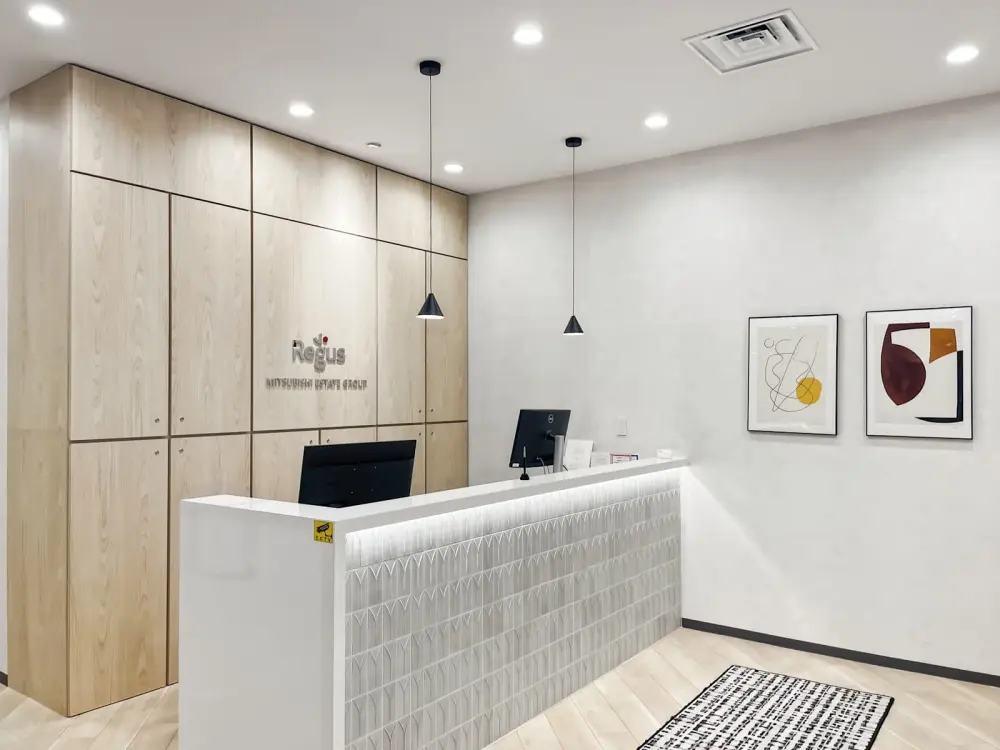
Regus CHIBA, Chiba Daiei
Located in the Chiba Station Area district, this centre provides 9 live offers for 1 to 10 desks with 24/7 access just 154 m from Sakaechō Station. Its monthly entry price of 56,500 JPY before tax gives established teams immediate access to 15 on-site services.
- 9 live offers
- 24/7 access
- Sakaechō Station 154 m away
- 15 services
Regus Chiba, Makuhari
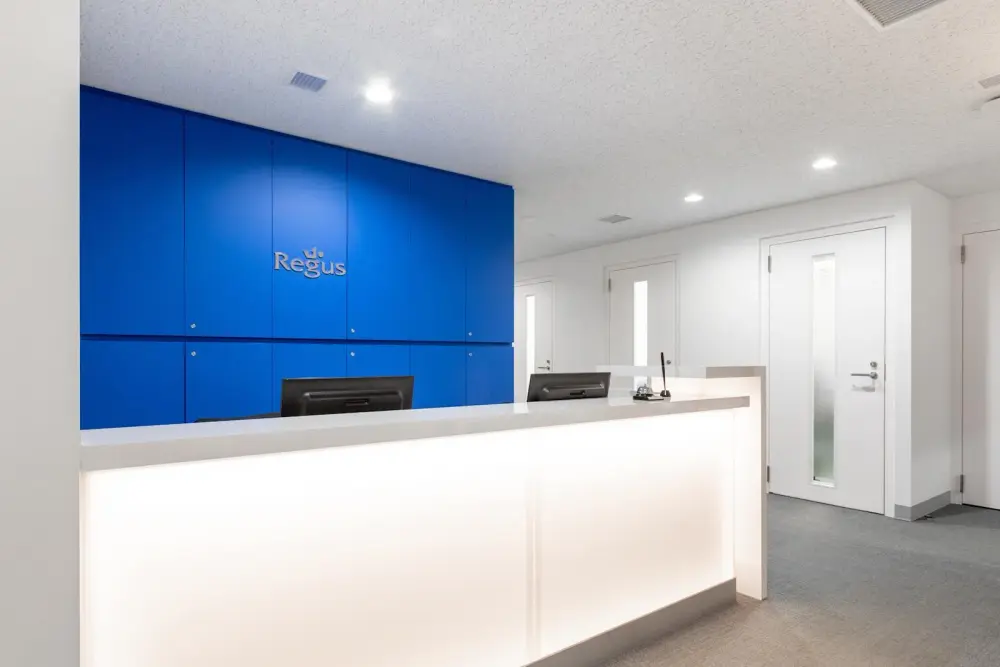
Situated in the Makuhari district, this business hub features 9 live offers for teams of 1 to 10 people 614 m from Kaihimmakuhari Station. The monthly entry price of 20,500 JPY before tax sits below the city median and includes continuous 24/7 access.
- 9 live offers
- 24/7 access
- Kaihimmakuhari Station 614 m away
- 15 services
Access around Chiba Station and how workin.space supports your search
Transport connectivity in the area anchors on Chiba Station, located 3.8 km from the centre, while international transit runs via Haneda Airport, situated 28.8 km away. Commercial inventory clusters primarily around the Chiba Station Area and the business district of Makuhari. Navigating a market managed entirely by a single provider requires clear visibility on real desk inventory, adjoining office expansions, and inclusive service terms before you commit. We help your management team evaluate live workstation availability and negotiate all-inclusive serviced agreements across the 20 km Chiba catchment radius without wasted time.