
Coworking spaces in Shanghai
45 spaces in Shanghai : By the day or for several months: coworking, meeting rooms, private offices and managed offices.
Need a space today in Shanghai?
15 spaces within 5 km: a coworking open-space desk, a meeting room or an office for the day, real-time availability and online payment in 2 minutes.
Frequently asked questions about offices and workspaces in Shanghai
Why use workin.space to find offices in Shanghai?
We track 45 spaces in Shanghai, and we keep their rates up to date continuously. That is what lets us tell you, before you make a single call, who charges what and on which office size.
On a longer project, our work starts where comparison ends: an expert who knows the local operators builds your shortlist within 48 hours, arranges the viewings and negotiates on your behalf, at no fee.
How many workspaces are there in Shanghai?
Our directory holds 45 spaces in Shanghai, 40 of which share their rates with us. The others work on quotation, and we ask them for you.
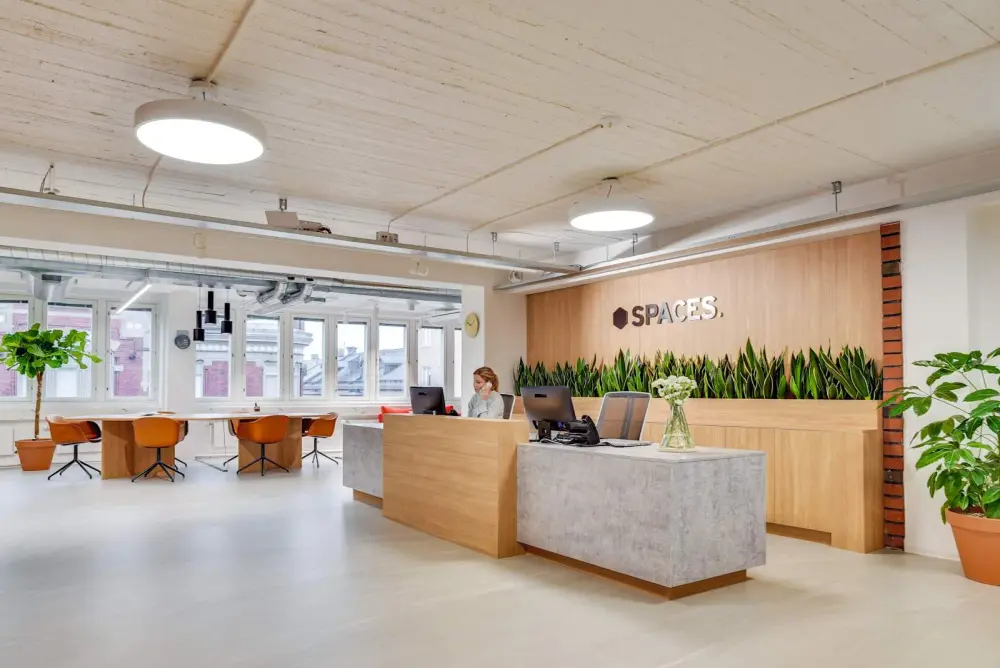
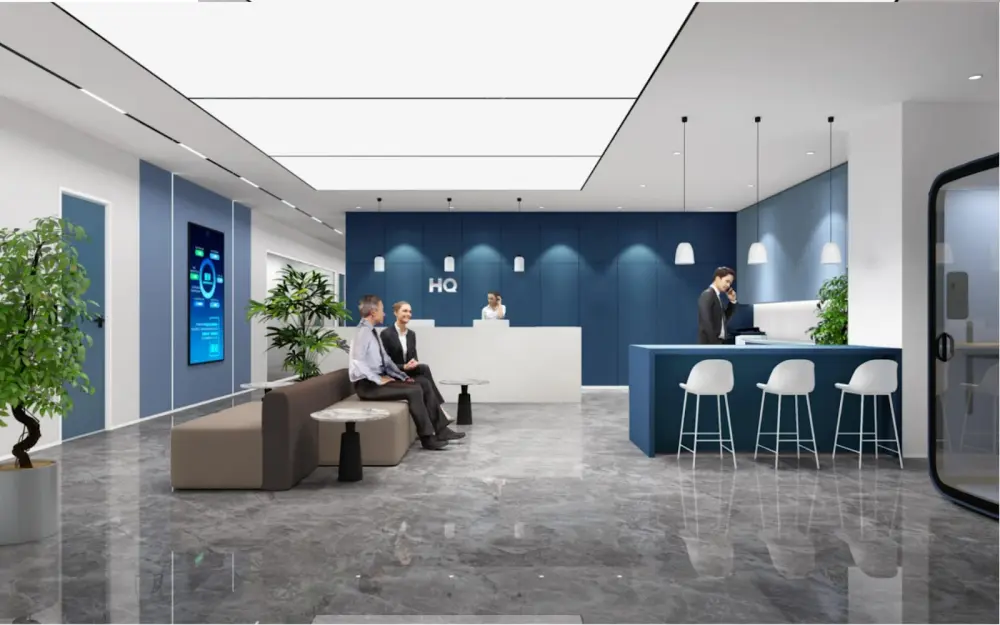
The most common brands: Regus (30), Spaces (8), HQ (4), Dialogs Shanghai (1), Open Office (1), Signature (1).
Regus alone accounts for 30 of the 45 spaces in the area: the local market is largely shaped by a single brand.
How much does a private office cost per month in Shanghai?
We record 39 spaces renting a private, closed office in Shanghai.
We detail the inventory of 42 of them: 437 closed offices, that is 3,680 listed desks.
These amounts are all inclusive: equipped desk, charges, cleaning and shared services. That is what makes them hard to compare with a conventional lease, always quoted excluding charges.
- Monthly: from ¥680 excl. tax
- Half of the spaces below ¥1,750 per month, excl. tax
- 4 spaces on request
How much does a private office cost per month by team size in Shanghai?
We price each team size on the offices that actually hold it, never on the smallest office in the building.
- For 2 people: 33 spaces in Shanghai, from ¥1,360 excl. tax per month
- For 6 people: 31 spaces in Shanghai, from ¥4,080 excl. tax per month
- For 10 people: 27 spaces in Shanghai, from ¥6,800 excl. tax per month
How much does one desk in a private office cost per month in Shanghai?
Per desk, half of the Shanghai spaces renting closed offices come in below ¥1,750 excl. tax per month.
This is the figure we use to compare two buildings: it cancels out office size and brings out the real gap between operators.
What is the largest team you can move into Shanghai?
The largest closed office in our Shanghai directory holds 83 people.
28 spaces offer an office of 11 desks or more.
That figure does not tell the whole story. Large floors are rarely marketed online: operators keep them for qualified enquiries, and we regularly source ones that appear nowhere. Tell us about your project, we search off market too and come back to you within 48 hours.
What is included in a private office in Shanghai?
42 spaces rent closed offices in Shanghai. Here is what comes up most often: Multi-centre access (42), High-speed Wi-Fi (42), Mail handling (42), Registered business address (42).
The line to watch is the meeting-room allowance included in the rent: beyond it, billing goes by the hour.
Are the offices in Shanghai accessible 24/7?
Yes for 44 of the 45 spaces we track in Shanghai.
This is worth checking early: it governs weekend and out-of-hours access, and not every operator grants it on closed offices.
How much does a meeting room cost in Shanghai by group size?
We track 40 spaces with at least one meeting room in Shanghai.
In Shanghai, the entry price is multiplied by 3.5 between 4 and 12 people: room size really does cost.
- Hourly: from ¥80 excl. tax
- Daily: from ¥447 excl. tax
- For 4 people: 33 spaces in Shanghai, from ¥447 excl. tax per day
- For 6 to 8 people: 30 spaces in Shanghai, from ¥1,005 excl. tax per day
- For 10 to 12 people: 11 spaces in Shanghai, from ¥1,563 excl. tax per day
How much does a day of coworking cost in Shanghai?
33 spaces open their shared area by the day in Shanghai.
- Daily: from ¥120 excl. tax
- Half of the spaces below ¥220 per day, excl. tax
Can you rent an office by the day in Shanghai?
Yes: 33 spaces rent a closed office by the day in Shanghai.
This is the format our clients use for a board meeting, a recruitment session or a team passing through.
- Daily: from ¥280 excl. tax
- Half of the spaces below ¥620 per day, excl. tax
Figures measured across the 45 spaces we list in Shanghai. Last updated: 14 October 2026.
Serviced offices and flexible workspaces in Shanghai
Locking down an office in Shanghai reveals a massive pricing gulf where entry tiers cost less than half the market median, with 10-person private suites starting at 8,800 CNY per month against a city median of 21,500 CNY. Settling for the first quote you receive without auditing the spread means bleeding capital that could otherwise fund your local market expansion.
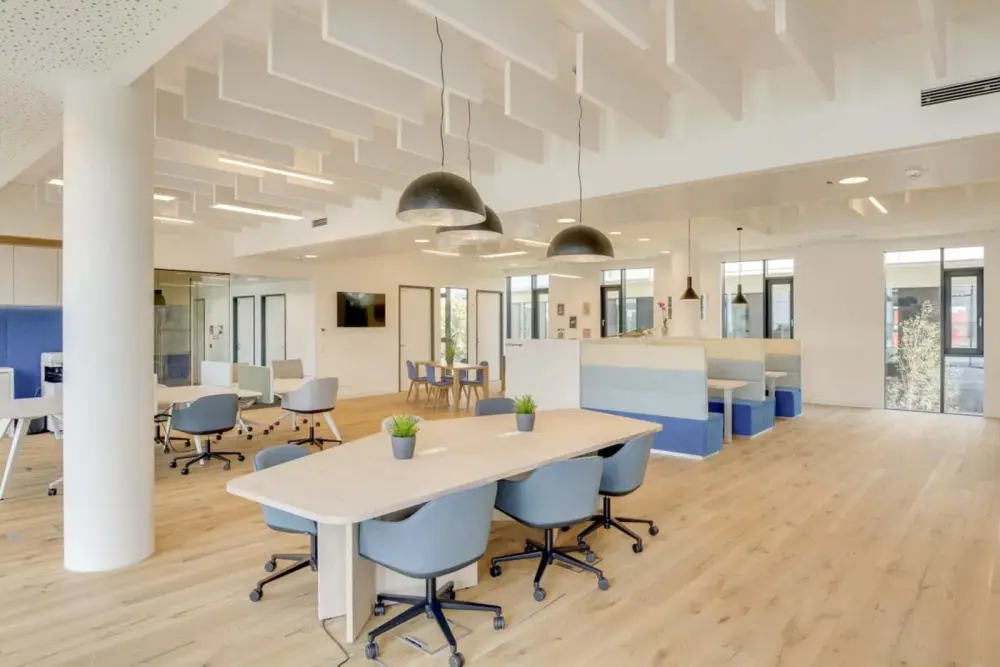
No. 258 Changjiang Road, Baoshan District, 200441, Shanghai
from 750 CNY
1,650 CNY per desk in Shanghai: navigating the spread
Your real estate overhead in this city drops dramatically when you choose flexible inventory over a conventional lease. Across 42 spaces providing 437 offers and 3,697 desks within a 27 km radius of the centre, the median desk rate sits at 1,650 CNY per month before tax. A traditional commercial lease demands substantial capital expenditure for fit-out, upfront security deposits, and management fees before your team even plugs in a laptop. Here, rates include high-speed Wi-Fi, mail handling, multi-centre access, and a registered business address across all 44 spaces in our records, with round-the-clock entry guaranteed by 24/7 access everywhere.
Scalability remains practical even for established departments. While the largest published single office lists 83 desks, operators routinely combine adjacent units to accommodate larger headcounts. Committing to a multi-year property contract just to secure contiguous floor space is an expensive habit when serviced operators reconfigure layouts on demand.
Private office for 2 to 10 people in Shanghai
Securing a private office for a team of 2 starts at 1,360 CNY per month, against a median of 3,300 CNY. For a team of 6, monthly rates start at 4,080 CNY, while the median reaches 10,500 CNY. Growing teams of 10 see starting rates of 8,800 CNY compared to a median of 21,500 CNY. Paying the median rate for standard team configurations costs your business an extra 12,700 CNY every month compared to entry-tier deals. That price premium buys prestige or prime views, but it adds zero productivity to your core team.
Coworking desk by the month: 41 bookable offers
Dedicated and flexible coworking positions reduce financial drag when onboarding initial staff. Across 43 spaces with 41 bookable offers, monthly coworking starts at 680 CNY, with a city median of 1,330 CNY per month before tax. Buying fixed workstations for staff who spend half their week meeting clients off-site remains one of corporate real estate's most reliable ways to waste money.

195 Guang Fu Xi Lu, 200061, Shanghai
from 2,800 CNY
Meeting room in Shanghai: 110 options from 447 CNY per day
Booking dedicated space for client presentations or board reviews does not require renting permanent square meters you only use twice a month. You can secure a Meeting room in Shanghai across 39 spaces listing 110 bookable offers, starting at 447 CNY per day with a market median of 1,005 CNY per day.
Small strategy sessions for 4 people are available across 31 spaces, starting from 447 CNY per day with a median of 1,199 CNY. Medium gatherings for 8 people run across 28 spaces, with pricing starting at 1,005 CNY and a median of 2,038 CNY per day. Larger sessions for 12 people are housed across 11 spaces, starting at 1,563 CNY with a median of 2,680 CNY per day. Reserving a 12-person boardroom at the median rate of 2,680 CNY makes financial sense for a closing dinner pitch, but hosting a routine sprint retro there simply pads the landlord's margins.
Day office and coworking day pass in Shanghai from 120 CNY
Visiting teams and short-term project units require immediate workspace without the drag of monthly commitments. A Coworking day pass in Shanghai is available from 15 CNY per hour or 120 CNY per day across 43 spaces, with a daily median of 220 CNY.
Private short-term setups require a step up in focus and privacy. Booking a Day office in Shanghai spans 43 spaces with 437 bookable offers, starting at 51 CNY per hour, 280 CNY per day, or 680 CNY per month, with medians recorded at 620 CNY per day and 1,760 CNY per month. Testing an office district for 280 CNY a day saves you from signing a year-long agreement in a neighbourhood your staff dread traveling to.
Business districts and transit hubs across Shanghai
Location selection dictates hiring reach and client accessibility. Inventory in our records spans key corporate clusters: Lujiazui holds 3 spaces in the financial district, Lujiazui Financial District accounts for 3 spaces, Minhang Industrial Park offers 3 spaces as a corporate centre, Baoshan Industrial Zone provides 2 spaces, Hongqiao holds 2 corporate centre spaces, Hongqiao Innovation Center features 2 spaces, Huangpu Bund Commercial Zone accounts for 2 central business district locations, and Jing'an CBD provides 2 central business district spaces.
Commutes depend on proximity to core transit connections. Distances measured from the city centre include 一号线陕西南路(3号口) at 1.8 km, 上海火车站 at 2.1 km, 上海火车站西南出口 at 2.8 km, Shanghai Railway Station at 3.2 km, Traffic Masses Coach Station at 7.9 km, and Shanghai Hongqiao International Airport at 13.9 km. Regus leads local operator availability with 30 spaces, followed by Spaces with 8, HQ with 4, Open Office with 1, and Signature with 1. Picking an address purely for prestige over transit connections guarantees your team spends their most productive morning hours stuck in traffic.
Shanghai: the three spaces we highlight
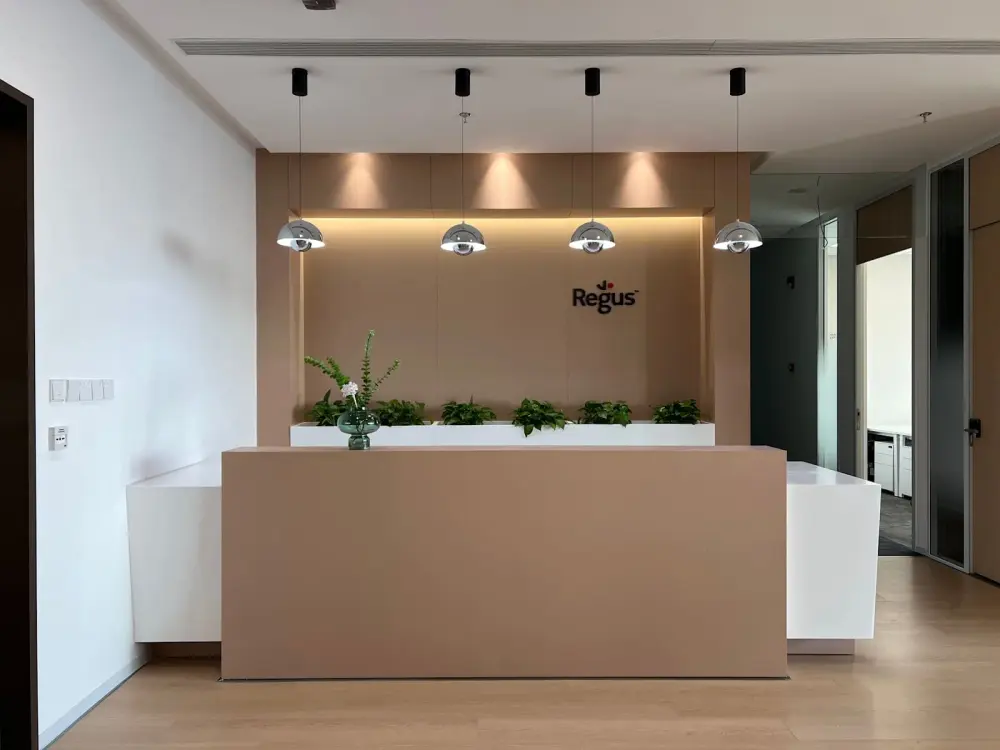
Regus SHANGHAI, Cloud 9
Positioned in Changning Business District just 80 m from 中山公园地铁站, this space delivers 19 live offers scaling from 1 to 27 desks with 17 services. Entry monthly pricing sits at 1,850 CNY, offering 24/7 access slightly above the city median for high convenience transit access.
- 19 live offers
- 24/7 access
- 中山公园地铁站 80 m away
- 17 services
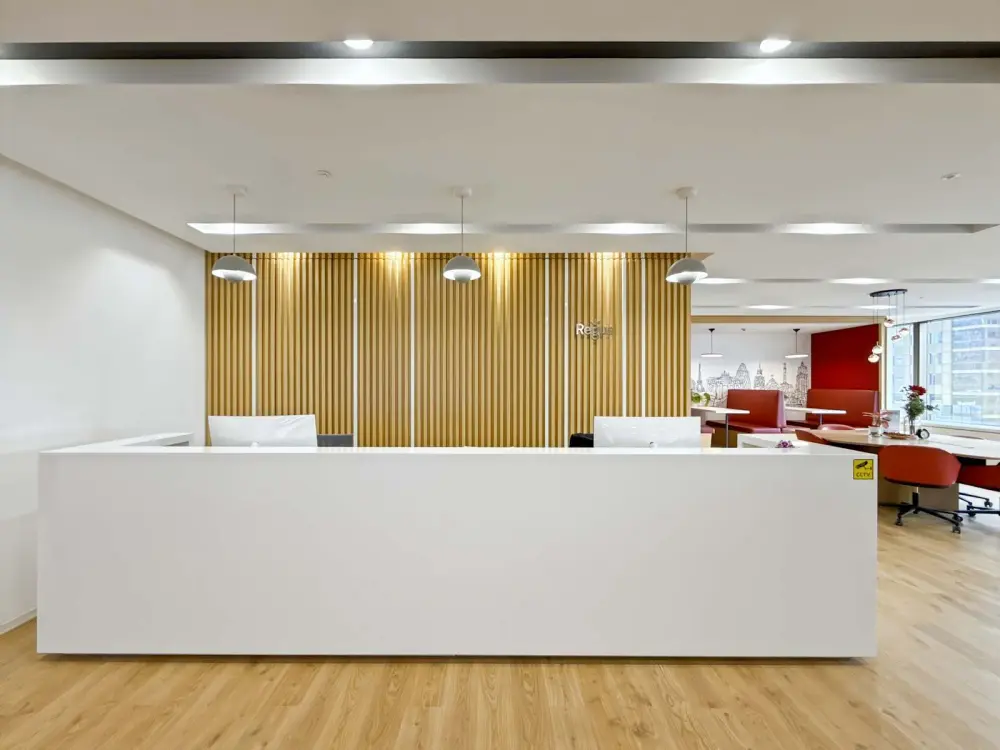
Spaces SHANGHAI, Spaces Kaibin Ltd
Located in Pudong Kaibin, this site provides 14 live offers spanning 1 to 19 desks alongside 17 services and 24/7 access. The entry rate of 1,080 CNY per month sits well below the city median, located 1133 m from 龙华站.
- 14 live offers
- 24/7 access
- 龙华站 1133 m away
- 17 services
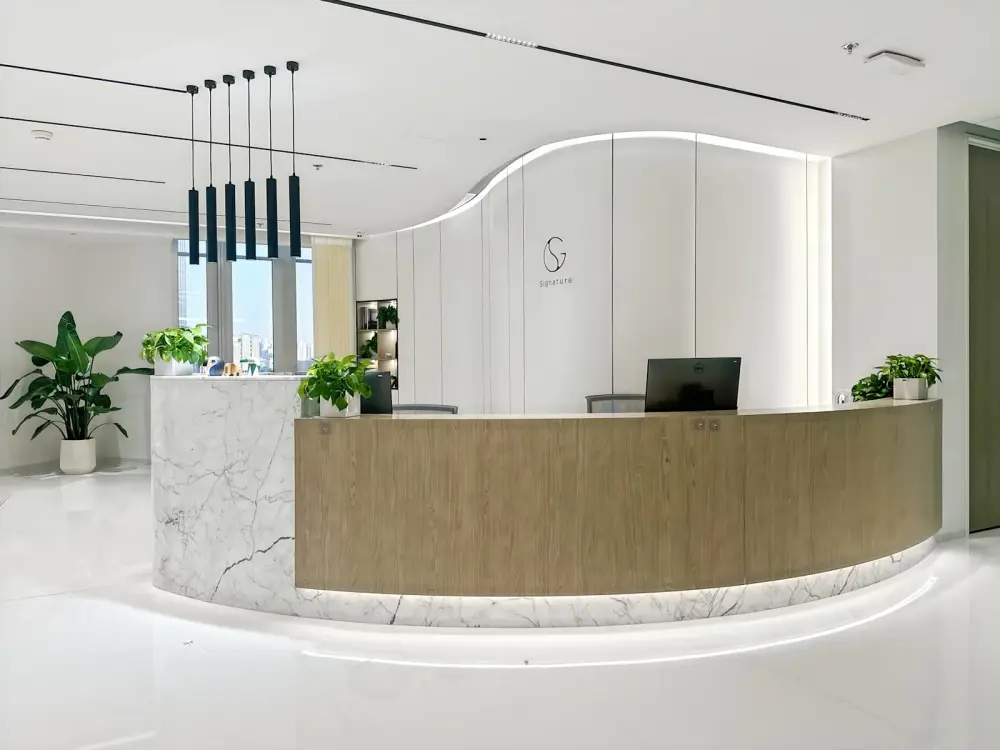
Signature Shanghai, Jinmao Tower
Set in Lujiazui with 21 live offers for 1 to 31 desks, this location includes 15 services and 24/7 access. Entry pricing of 1,780 CNY per month remains below the city median, situated 1548 m from 老西门站.
- 21 live offers
- 24/7 access
- 老西门站 1548 m away
- 15 services
How workin.space helps you find offices in Shanghai
Comparing 44 locations and 39 spaces with published pricing across Shanghai takes clarity, not guesswork. We map your headcount and operational needs against current live availability, ensuring you do not overpay for floor space when market entry points sit thousands of CNY below prevailing medians.