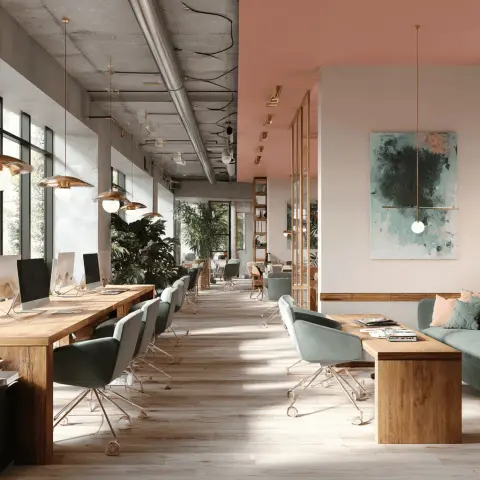
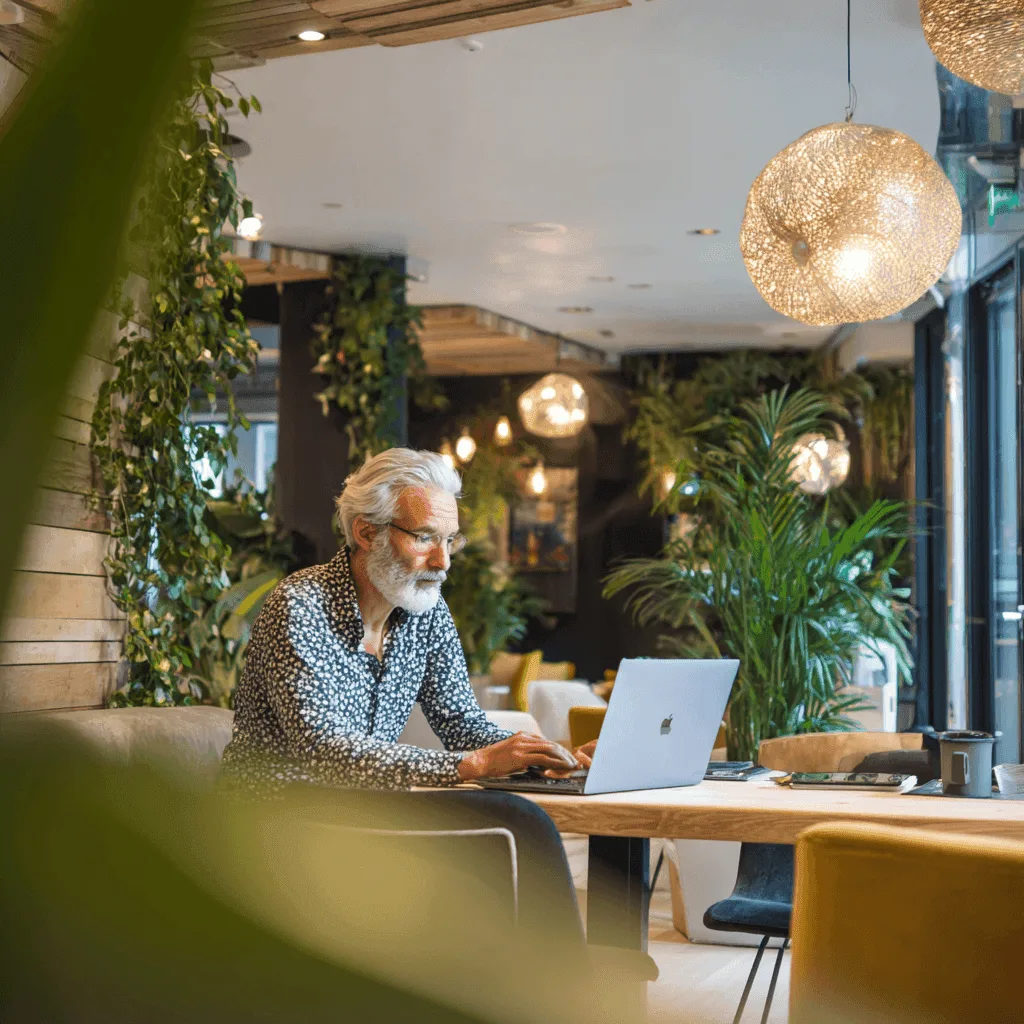
For a long time, the flex office was presented as an essentially economic solution, a pragmatic way of optimizing floor space that had become oversized in view of new working practices. And the figures seemed to speak for themselves: even before the massive rise of telecommuting, offices were only occupied half the time. The widespread adoption of hybrid working practices has finally undermined the relevance of a model based on the fixed, immobile, individual workstation. In this context, giving up the personal allocation of an office was no longer seen as an upheaval, but as an obvious way of reducing costs, improving real-estate efficiency and adapting spaces to contemporary uses. However, the companies that have taken the plunge recognize that the reality far exceeds this initial justification. A genuine cultural transformation was underway! We tell you all about it.
The personal office, a silent but essential landmark
Once implemented, the flex office - more commonly referred to today as the flexible office- doesn't just change the way we occupy space. It overturns the way employees project themselves into their work, how they perceive their place in the organization, and how they interpret the collective bond that unites them. In other words, it imposes a cultural transformation that can neither be improvised nor underestimated. Nevertheless, the individual office still sometimes has its place.
The individual office, however modest, has been a symbol for decades. It symbolizes belonging to a team, seniority, and sometimes even implicit recognition by the hierarchy. Removing this territoriality inevitably creates an imbalance, even when employees understand the rational reasons for the change.
For the flexible office to work, it must become a corporate project, and not just a simple fitting-out, as it involves transformations that go far beyond furniture or square meters. It imposes a new way of working, of coordinating, of managing time and even of conceiving one's own autonomy. Organizations that have taken this change seriously agree on one point: the flex office is only possible if the company is ready to move towards a culture of trust. The office is no longer the place that guarantees presence, and therefore supposed productivity. It becomes one space among others in which to do one's work, a space chosen rather than imposed. This means moving away from a management style focused on control, towards one based on objectives, clear missions and quality results.
A profound transformation of work and management
This transition to a flexible office model cannot be decreed: it requires managers to upgrade their skills, HR practices to be transformed, and a collective rethink of how people work together. Paradoxically, the flexible office requires more organization than the traditional office. It presupposes clear rules, and requires greater mastery of digital tools, transparent sharing of space... This new codification is not a constraint if it is understood, co-constructed and explained, but when it is imposed without support, it can fuel a feeling of paradoxical rigidification of a model that is supposed to offer more freedom.
As organizations experiment, another dimension emerges: the flexible office is also a response to contemporary employee expectations. The relationship with the office has changed. For many, it is no longer the center of gravity at work, but a place to meet, exchange ideas and be creative. It's a resource center where people come to rediscover the collective, to benefit from an inspiring environment, to have access to services or collaborative spaces that can't be reproduced at home. In this sense, the flexible office, when well thought out, can become a tool for improving the employee experience.
Towards a second-generation flex office
Today, we are seeing the emergence of a second-generation flex office, one that is more mature and more responsible. It's a model that's no longer content to simply move partitions around, but really questions the meaning given to working together. Spaces are designed to promote health, creativity and collaboration, and sobriety becomes an element of environmental commitment.
Employees are no longer mere occupants, but actors in their professional environment. The office ceases to be a place of constraint and becomes a place of resources, adaptable and focused on uses.
In this way, the flexible office opens the way to a new, more fulfilling way of conceiving work. Provided, however, that we understand that this is not a change of layout, but a change of culture. And a culture can't be moved like a piece of furniture: it has to be built, discussed and shared.